Studio Recording vs Live Sound Engineering: Which Career Fits You?
Studio recording and live sound engineering are two exciting career paths in the music and entertainment industry. Discover the differences, required skills, career opportunities, and how to choose the right sound engineering career for your future.


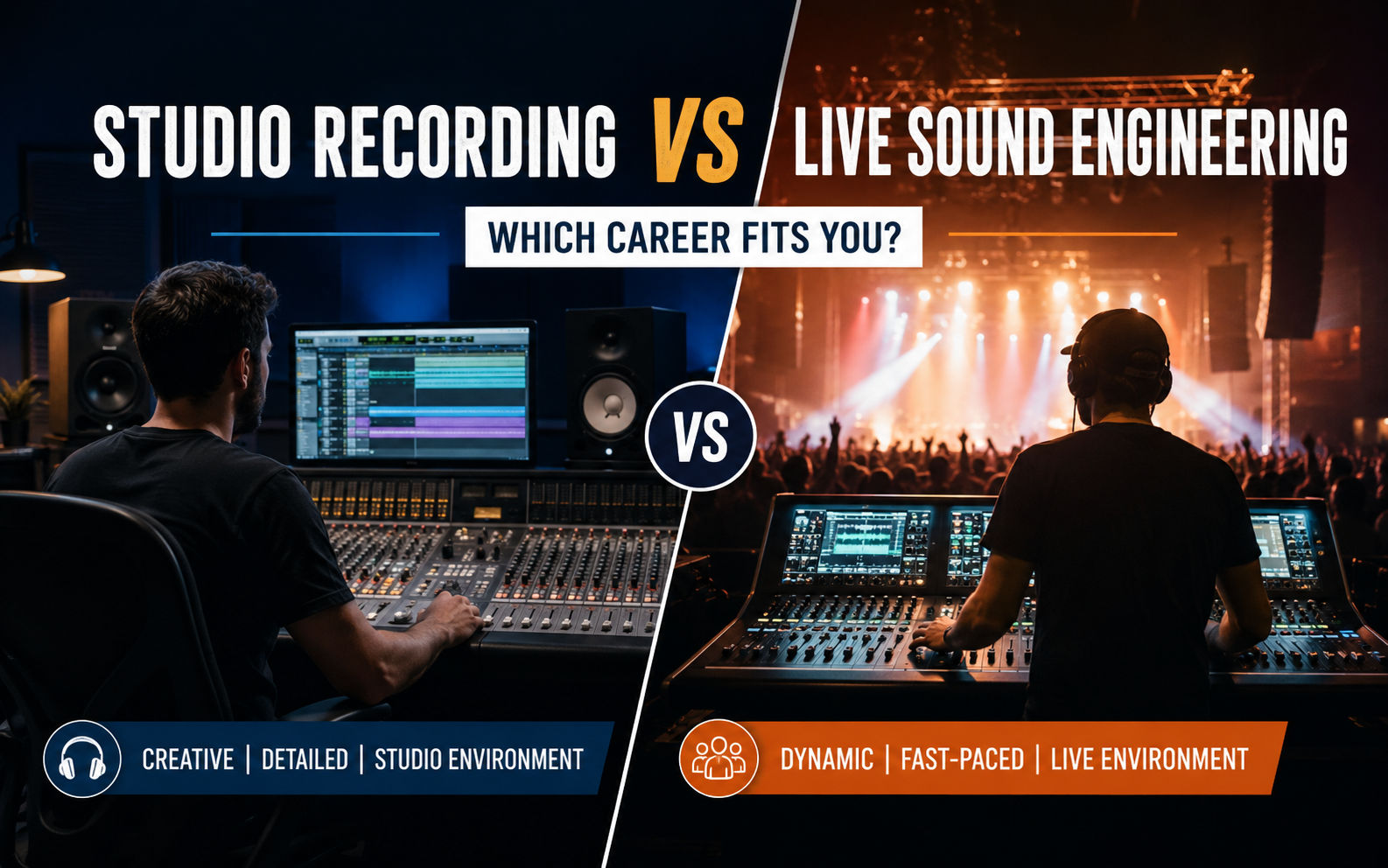
Introduction
Sound engineering is one of the most exciting and rapidly evolving careers in the entertainment industry. From recording chart-topping albums in professional studios to managing audio for massive concerts and live events, sound engineers play a critical role in shaping audience experiences across every medium.
But students entering the audio industry often face one important question early on: should they choose studio recording or live sound engineering? While both careers revolve around audio production, the work environments, daily responsibilities, career lifestyles, and required skill sets are quite different from each other. Some professionals thrive in the controlled, detail-driven atmosphere of a recording studio. Others are energised by the fast-paced unpredictability of concerts, festivals, and large-scale live events.
If you are considering a career through Sound Engineering Courses at Seamedu, understanding how these two specialisations operate before choosing a professional path can save you years of uncertainty and set you on a trajectory that genuinely suits your strengths.
What Is Studio Recording?
Studio recording focuses on capturing, editing, mixing, and mastering audio inside controlled recording environments. It is the art of turning raw performances into polished, emotionally resonant audio that listeners connect with — whether they are streaming a music album, watching a film, or listening to a podcast on their morning commute.
Studio sound engineers work across a wide range of formats including music albums, film audio, podcasts, voiceovers, commercials, background scores, and audio post-production. Their primary goal is audio perfection — carefully adjusting microphone placement, sound levels, equalization, compression, effects, and the overall mixing balance to bring an artist's or director's creative vision to life.
The role involves close collaboration with musicians, producers, directors, and artists over sometimes lengthy production cycles. Studio engineers often spend hours refining tiny details that listeners may never consciously notice, but will definitely feel emotionally. Students interested in music production and audio storytelling can also explore Media and Entertainment Programs at Seamedu to understand the broader entertainment production ecosystem and where sound sits within it.
What Is Live Sound Engineering?
Live sound engineering is a completely different discipline. It focuses on managing audio during real-time performances and events — concerts, music festivals, theatre productions, corporate events, sports events, award shows, and religious gatherings. Unlike studio recording, live audio cannot be paused or edited after the fact. What the audience hears in the moment is the final product.
Live engineers handle front-of-house sound, monitor mixing, PA systems, wireless microphones, real-time audio troubleshooting, and on-the-fly mixing decisions — all simultaneously, often in loud and unpredictable environments. A single technical failure during a live show can affect the experience for thousands of people, which is why the role demands both deep technical expertise and exceptional composure under pressure.
The environment is fast, dynamic, and highly energetic. Professionals working in large-scale live entertainment productions often combine technical audio expertise with broader production skills, which is why many benefit from exploring Filmmaking Courses at Seamedu alongside their audio training.
Work Environment Differences
The physical environment in which you spend your working hours is one of the clearest distinctions between these two careers. Studio recording engineers typically work inside recording studios, post-production facilities, editing suites, and music production houses. The environment is controlled, quieter, and structured around detail-oriented work that often unfolds at a deliberate, unhurried pace.
Live sound engineers, by contrast, work in concert venues, stadiums, outdoor festival grounds, touring buses, event stages, and wherever a performance is taking place. Their environment shifts constantly — sometimes from city to city, or even country to country. People who enjoy structured, repeatable workflows tend to prefer the studio setting. Those who enjoy variety, travel, and the energy of live crowds are often drawn naturally toward live events.
Work Pressure: Second Takes vs Real-Time Fixes
Studio recording is generally more forgiving when it comes to mistakes. If something sounds wrong, engineers can re-record tracks, edit mistakes out of the timeline, remix sections, or fine-tune effects across multiple sessions. The iterative nature of studio work allows for experimentation and refinement without the pressure of an audience watching in real time.
Live sound engineering offers no such safety net. Engineers must identify and solve technical problems instantly — while thousands of people are listening — using fast decision-making, calmness under pressure, and advanced troubleshooting skills. A feedback squeal, a dropped wireless signal, or a monitor mix that a performer cannot hear all need to be resolved within seconds. This is not a role for those who freeze under stress; it is a role that rewards experience, preparation, and steady nerves.
Creativity vs Technical Speed
Studio recording leans heavily toward creativity. Engineers spend time designing sound textures, experimenting with effects chains, enhancing vocal quality, building immersive mixes, and crafting audio that serves the emotional intent of a song, film, or brand. There is space for exploration and artistry because deadlines — while real — are typically not measured in seconds.
Live sound engineering places a greater premium on technical execution and consistent performance. Engineers must ensure balanced sound coverage across a venue, clear vocal intelligibility, stable equipment performance, and effective feedback prevention — all while reading the acoustic response of the room in real time and making rapid adjustments. Both fields demand creativity, but they apply it in very different ways and on very different timescales.
Students who are developing broader visual and creative storytelling abilities alongside their audio skills can also explore the Visual Communication Degree at Seamedu to better understand audience-focused production design.
Skills Required for Studio Recording
Successful studio engineers typically develop deep expertise across a specific and interconnected set of technical and creative disciplines. At the foundation is strong proficiency with DAWs — Digital Audio Workstations — including industry-standard platforms like Pro Tools, Logic Pro, Ableton Live, and Cubase. Beyond software fluency, studio engineers need solid grounding in mixing and mastering, audio editing, music production, microphone techniques, acoustic treatment principles, and sound design.
The learning curve is deep, and the standards are high — because in a studio, every imperfection is on permanent record. The best studio engineers combine technical precision with a genuine musical ear and the patience to chase the perfect sound across long, often exhausting sessions.
Skills Required for Live Sound Engineering
Live engineers need a different blend of technical and interpersonal skills. Core technical competencies include live mixing, signal flow management, stage setup and teardown, PA system operation, wireless audio system management, and rapid equipment troubleshooting. Understanding how sound behaves differently across different types of venues — from intimate theatres to outdoor arenas — is also essential.
Equally important, however, are communication skills. Live engineers coordinate in real time with performers, event managers, lighting teams, stage managers, and production crews. A technically brilliant engineer who cannot communicate clearly under pressure can create as many problems as they solve. Modern event productions increasingly use digital mixing consoles, networked audio systems, and automated processing tools. Students exploring future-ready media and audio technologies may also find value in Media Technology and AI Programs at Seamedu.
Technology in Modern Sound Engineering
Technology has fundamentally transformed both sides of audio production, and the pace of change continues to accelerate. Modern studios now work with AI-assisted mixing tools, virtual instruments, cloud-based collaboration platforms, Dolby Atmos spatial audio systems, and immersive audio formats designed for streaming platforms. These tools have expanded what is possible in a studio and have raised the ceiling for creative sound design.
On the live side, digital mixing consoles have replaced analogue desks at most professional venues, wireless networking allows for remote gain staging and system control, and automated audio processing tools help engineers manage complex multi-zone sound systems with greater consistency. The result is that both studio and live engineers now need to be as comfortable with digital workflows and networking concepts as they are with traditional audio fundamentals.
Students interested in understanding how multimedia storytelling, journalism, and audio production intersect in the modern media landscape can explore Journalism and Media Production Courses at Seamedu.
Salary and Career Opportunities
Both studio recording and live sound engineering offer strong and diverse career opportunities, though they tend to attract professionals through different channels and industry networks.
Studio Recording Career Paths
Common roles in studio work include Recording Engineer, Mixing Engineer, Mastering Engineer, Music Producer, Audio Editor, and Sound Designer. Studio professionals often build long-term relationships with music labels, film studios, podcast production companies, advertising agencies, and OTT content platforms. Freelance work is common, and the best studio engineers often develop a reputation that generates a steady pipeline of inbound projects.
Live Sound Career Paths
Common roles on the live side include Front-of-House (FOH) Engineer, Monitor Engineer, Touring Audio Engineer, Stage Technician, and Event Sound Operator. Live sound professionals typically work with concert production companies, touring artists, event management agencies, theatre companies, and sports entertainment organisations. Touring work in particular can be both financially rewarding and an excellent way to build a professional network across the industry.
Income in both paths depends significantly on experience, the quality of your professional network, your technical reputation, and the markets you serve. Many engineers who develop competency in both areas are able to command higher rates and access a broader range of projects as a result.
Which Career Fits Your Personality?
Beyond skills and job titles, the most important factor in choosing between these two paths is an honest assessment of what kind of work environment energises you and what kind drains you.
Studio recording tends to suit people who enjoy creative detail work, prefer quieter and more controlled environments, have patience for long production sessions, find satisfaction in iterative refinement, and have a genuine interest in music composition or sound design as artistic disciplines.
Live sound engineering tends to suit those who thrive in fast-paced, high-energy environments, enjoy travel and the variety of working in different venues, perform well under real-time pressure, have strong instincts for teamwork and communication, and find the unpredictability of live events exciting rather than stressful.
It is also worth noting that many professionals eventually develop competency in both areas — starting in one and building skills in the other over time. That versatility has become increasingly valuable in the modern entertainment industry, where the lines between studio, broadcast, streaming, and live production continue to blur.
The Future of Sound Engineering Careers
The audio industry is in a period of sustained and broad-based growth. The explosion of OTT content platforms, independent podcasting, gaming audio, virtual production, and immersive media has created demand for skilled sound engineers well beyond the traditional boundaries of music studios and concert venues. Today, audio professionals are building careers across film and television, streaming platforms, video gaming, advertising, live events, and digital media companies of all sizes.
Sound engineers who combine strong technical foundations with an understanding of storytelling, digital media workflows, and audience-centred production are the ones best positioned to thrive across this expanding landscape. Students preparing for future-focused creative careers can build that foundation through Sound Engineering Courses at Seamedu, ideally alongside practical production exposure through Media and Entertainment Programs.
Frequently Asked Questions
What is the core difference between studio recording and live sound engineering?
Studio recording focuses on audio production inside controlled environments where sounds can be captured, edited, and refined over time. Live sound engineering manages audio during real-time performances and events, where every decision is final and immediate.
Which career pays more: studio recording or live sound engineering?
Both offer competitive earning potential. Income depends on your level of experience, the clients and projects you work with, your technical reputation, and the strength of your professional network. Senior professionals in both fields can earn well, particularly in major entertainment markets.
Is live sound engineering a stressful career?
It can be high-pressure, particularly during large-scale events where technical problems must be solved instantly in front of a live audience. That said, many engineers thrive on exactly this kind of challenge. With experience, the stress becomes manageable and even motivating.
What software do studio recording engineers use most?
The most widely used platforms include Pro Tools, Logic Pro, Cubase, Ableton Live, and Adobe Audition. The choice often depends on the genre, studio, or production context.
Can a sound engineer work in both studio and live environments?
Yes, and many do. Developing expertise in both areas increases your career flexibility and opens up a wider range of freelance and full-time opportunities. Many engineers start in one area and gradually build competency in the other over several years.
Is sound engineering a good career choice for the future?
Demand for skilled sound engineers is growing steadily across OTT platforms, music production, gaming, podcasting, and live entertainment. The role has expanded well beyond traditional music studios, making it a strong long-term career choice for those who invest in their technical and creative development.
Ready to explore your path in audio production? Learn more about Sound Engineering Courses at Seamedu, or browse the full range of Media and Entertainment programs across Seamedu's Pune, Gurugram, and Kolkata campuses.

CATEGORIES
- MBA Program
- Data Science and Analytics
- Cloud Computing
- Data Analytics and Business Intelligence
- AI and Digital Systems
- Cyber Security and Digital Forensics
- Business Analytics & Intelligence
- Banking & Financial Services
- International Business
- Digital Marketing
- Research Paper
- Media & Entertainment
- Media Management
- Journalism and Media Production
- Media & Information Technology
- Visual Communication
- Game Development
- Sound Engineering
- Game Art & Design
- Photography
- Film Making
- Animation & VFX
Are you aspiring to become a proficient Sound Engineering professional?
Look no further; we are committed to nurturing the potential of young minds. Are you ready to enhance your skills?