Understanding Distortion
What is Harmonic Distortion?
Distortion is overloading any audio equipment to a point where the equipment, because of overloading, starts acting unnaturally, which results in adding harmonics. Depending on the equipment, it will begin to add even or odd harmonics. However, this changes drastically when the equipment context changes. Distorting happened accidentally when someone tried to get the guitar amplifier louder than what it could play and hence overloading, somewhat “loudspeaker blowing,” which was the way to go in the early 60s and 70s.

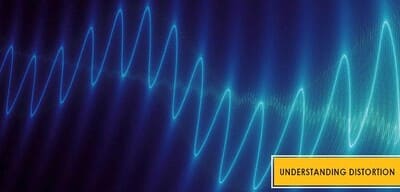
Then it became like a standard, especially for electric guitars and eventually in the bass, so on, and with other instruments wherever you can apply creatively. Distortion eventually became a most used and loved distortion effect in all genres, with a stronghold on the distorted guitar sounds.
Distortion in the analog world is pleasant and is the kind of distortion we all are used to listening to. All the distortion plugins like guitar distortion plugins, after distortion effect plugins, or othersthat we come across in any DAW or digital domain are inspired by analog equipment. Now this distortion can happen at many stages and in different ways. Distortion can happen at a compressor, an EQ, or simply on a channel strip at input on the channel strip at the gain staging part, wherever there is an opportunity of overloading the equipment with the audio signal.
Overloading technically becomes impossible in the digital domain. In the digital domain, the audio signal is nothing but samples. When samples overload at any stage, the digital domain reacts like analogue equipment. Unlike the analogue domain, the distorted effect in the digital domain is harsh and undesirable. Distortion does not exist in the digital domain, and what exists in the digital domain is clipping, which is harsh and unpleasant.
What distortion plugins do we come across in the digital domain?
Many plugins offer distortion in any DAW but do not work like analogue equipment. All the distortion plugins replicate the frequency changes or the analogue equipment’s distortion sound wave changes in the digital domain. In short, they are nothing but simulations of the equipment working from the analogue world.
So what makes harmonic distortion unique or desirable is the analogue circuitry and nothing else, which allows us to apply the approach to every piece of equipment possible. Digital gives rise to several plugins such as EQs, compressors, and time-based effect such as reverbs, delays, and echoes. But what is distortion exactly, and why does it matter? Understanding this concept helps us appreciate how different equipment types and effects shape the distortion sound wave.
The warmth and brightness we notice while using analogue simulations are nothing but the circuitry we like and the way audio changes when it passes from the circuit. Though we can simulate it, it is not guaranteed to match the analogue gear. Now, this is the case for every simulation.
Technically speaking, we should not use a compressor with tonal shaping, as a compressor will only work with the audio dynamics and not the totality of any audio. However, this statement becomes void regarding analogue simulations, as they are used for the tonality of the circuitry. For example, the 1176 compressor is an extreme setting that distorts and starts adding harmonics to the audio.
How Does Distortion Works?
Distortion is an interesting subject frequently investigated in audio and video situations. So, how does distortion works? Distortion is defined as the alteration of a signal, leading it to vary from its original form. This can occur through a variety of causes, including cutting or saturation. To understand how does distortion works in audio, examine how a guitar amplifier changes sound waves to create a gritty, overdriven impression. Similarly, in visual media, how can distortion produce effects such as warping and blurring or what does distortion sound like? Distortion creates additional qualities by modifying the original data, giving the final product depth and texture.

CATEGORIES
- MBA Program
- Data Science and Analytics
- Cloud Computing
- Data Analytics and Business Intelligence
- AI and Digital Systems
- Cyber Security and Digital Forensics
- Business Analytics & Intelligence
- Banking & Financial Services
- International Business
- Digital Marketing
- Research Paper
- Media & Entertainment
- Media Management
- Journalism and Media Production
- Media & Information Technology
- Visual Communication
- Game Development
- Sound Engineering
- Game Art & Design
- Photography
- Film Making
- Animation & VFX
Are you aspiring to become a proficient Sound Engineering professional?
Look no further; we are committed to nurturing the potential of young minds. Are you ready to enhance your skills?